

More than two dozen people experiencing homelessness in Saint John will soon have a roof over their heads.
One of two new transitional housing communities on the city’s east side will start welcoming residents on Friday.
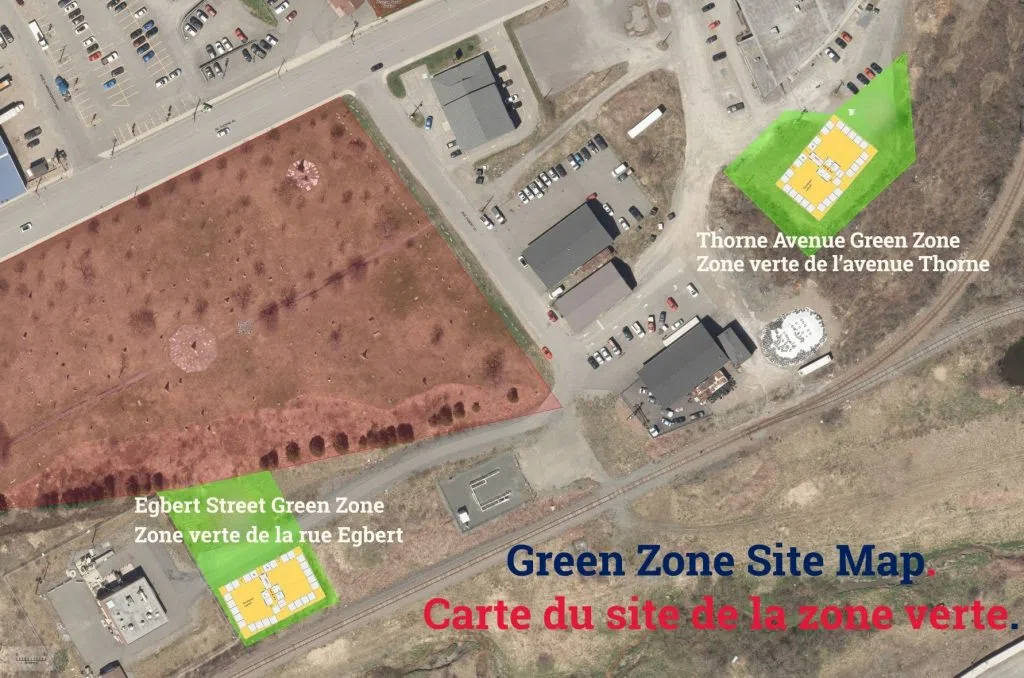
In May, council voted to designate two city-owned properties on Egbert Street and Thorne Avenue as “green zones.”
Council also entered into an agreement with Fredericton-based 12 Neighbours to develop and operate the transitional housing communities, known as Neighbourly Hoes.
“We’ve been working hard in construction mode, assembling everything,” Marcel LeBrun, founder of 12 Neighbours, told reporters during a tour on Monday.
“Everyone’s been selected, and I’ve actually met a few of the residents who’ve come by to check it out, so looking forward to moving on Friday.”
A total of 27 residents will live in each of the communities. The Egbert Street site will be the first to open, followed by the Thorne Avenue location later this fall.
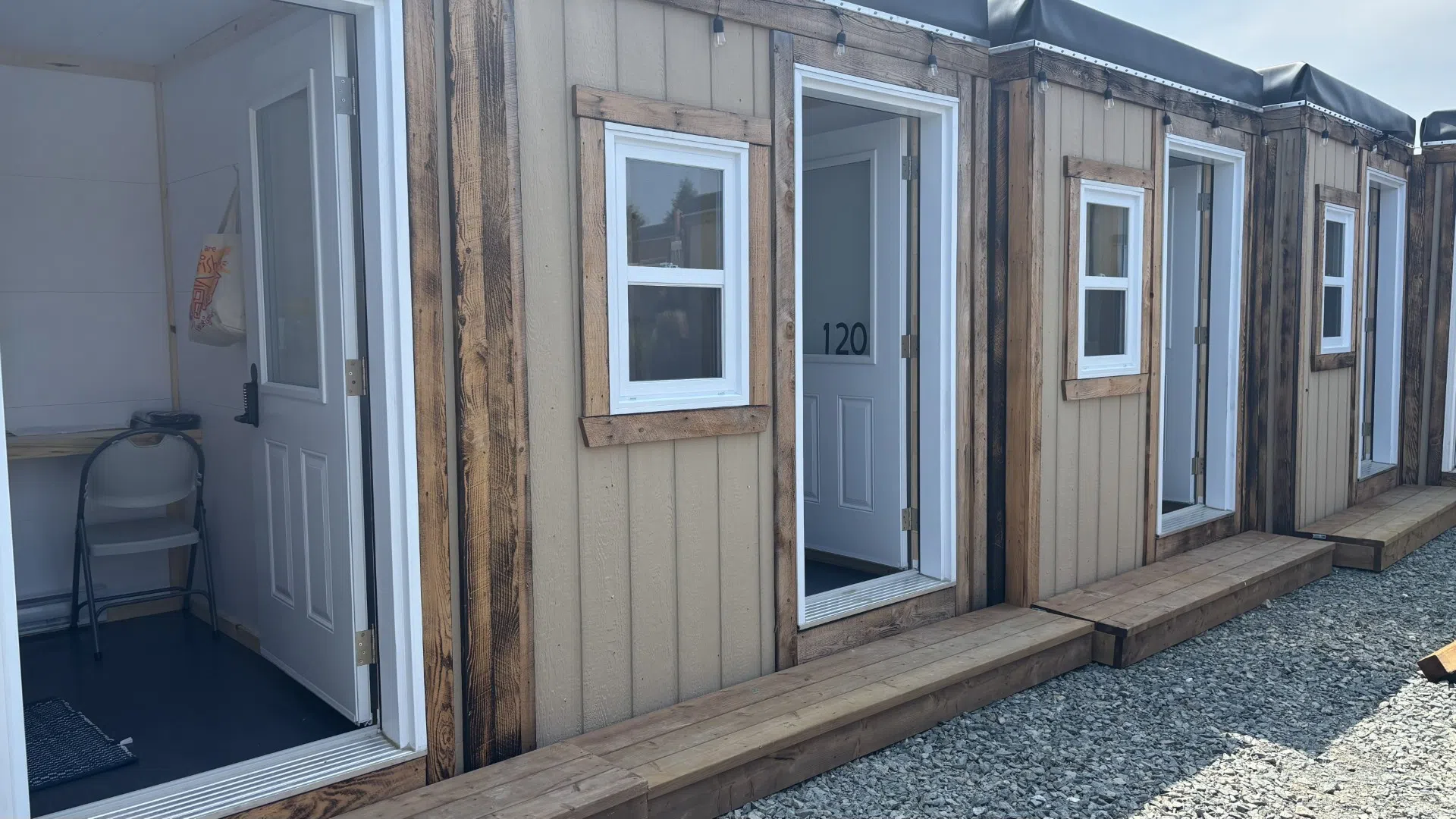
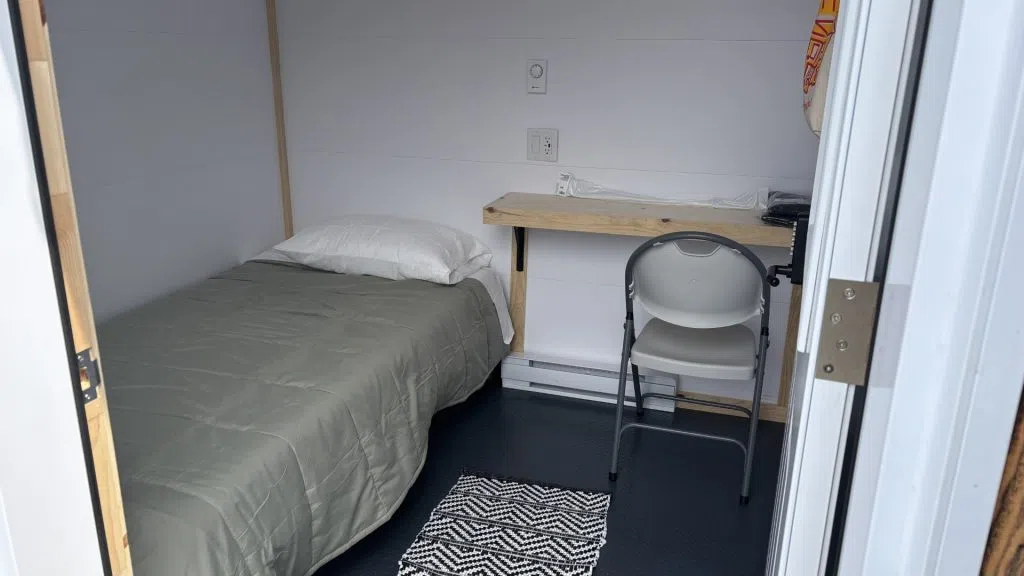
Each heated unit is eight feet by eight feet and includes a bed, lighting, internet and secure entry. They also have a tablet that gives residents access to services and entertainment.
There will be a shared space dedicated as washroom and shower facilities, laundry facilities, a community kitchen and a multi-purpose space.
In addition, there will be 24/7 on-site staff and wraparound supports for the residents to help them prepare for the transition to more permanent housing.
“It’s actually impossible to work on recovery, work on mental health, work on physical health, if you’re just surviving outside, that’s all you have time to do,” said LeBrun. “This doesn’t solve everything, but it provides that foundation that you can now start working on things.”
Figures from the Human Development Council show 456 people experienced homelessness for at least one day in June, with 287 of those considered chronically homeless.
City officials said while most of the feedback they have received has been positive, there have been some concerns from those near the two sites.
LeBrun said they have been working with businesses in the area to build relationships and keep them aware of what is going on.
“The line I hear everywhere when people talk is, ‘I love this idea. Oh, you’re not going to do it here, are you?’ So there’s always that challenge,” he said.
“Peer-reviewed evidence-based research says the number one thing you can do to reduce crime in your community is supportive housing. It’s more effective than even increase in policing.”
The site will be funded by $3.5 million the city received from the federal and provincial governments through the Unsheltered Homelessness and Encampments Initiative.